 11
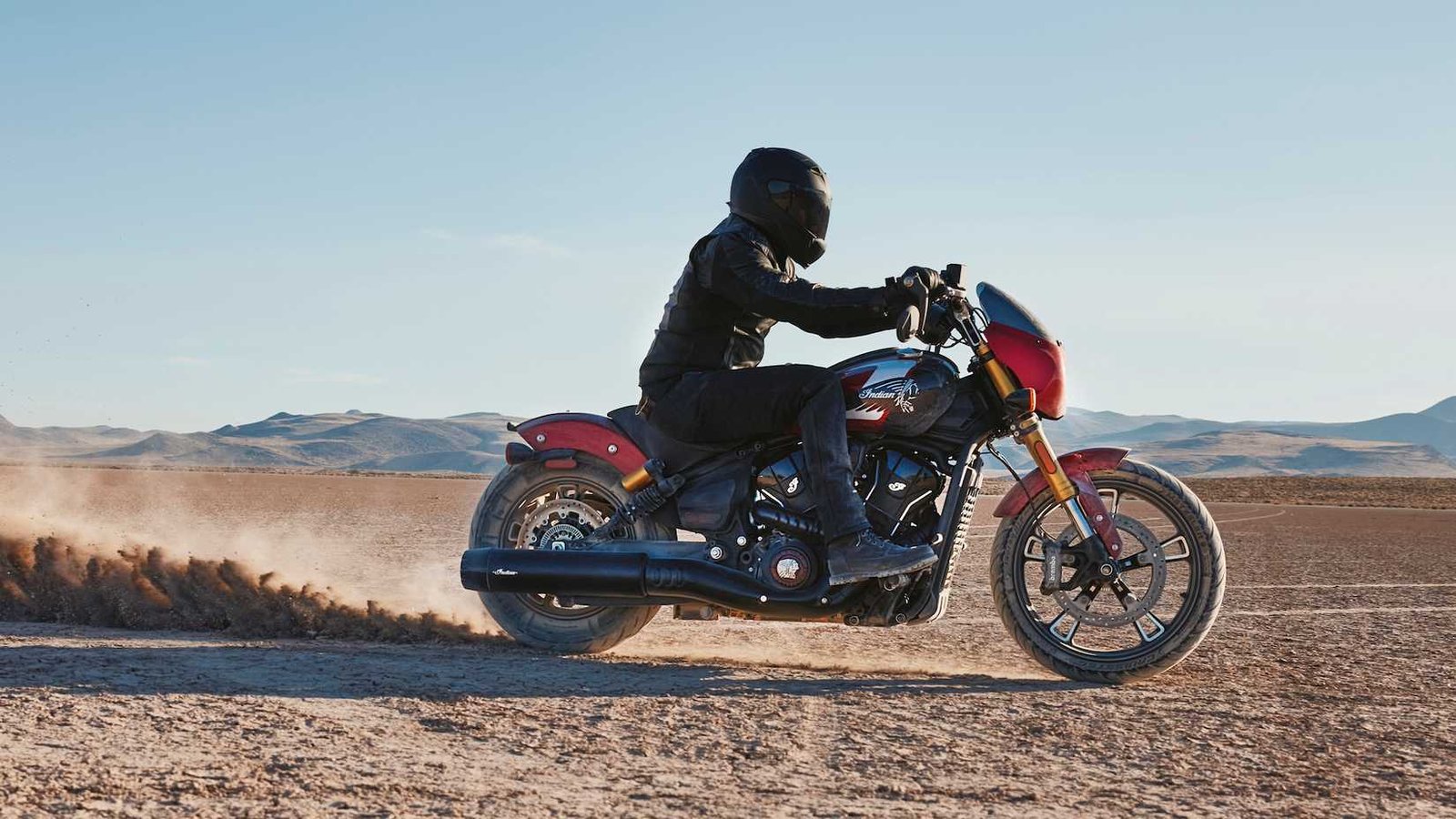
Few segments in motorcycling are as fiercely contested — or as culturally loaded — as the cruiser. For decades, the formula seemed locked in: a long-stroke, large-displacement V-twin rumbling down an open highway, wrapped in chrome and attitude. American brands owned that image, and the lifestyle that came with it proved irresistible to buyers worldwide. The segment rewarded loyalty with strong sales, healthy margins, and an accessories business that was almost as profitable as the bikes themselves.
What changed the game was Japan. Rather than simply cloning the American formula — a move that would have been commercial suicide — Japanese manufacturers asked a sharper question: what can we do that the Americans can’t? The answers ranged from engineering firsts to design spectacles to outright performance dominance. Here are 10 times the Japanese made better cruisers than the Americans.

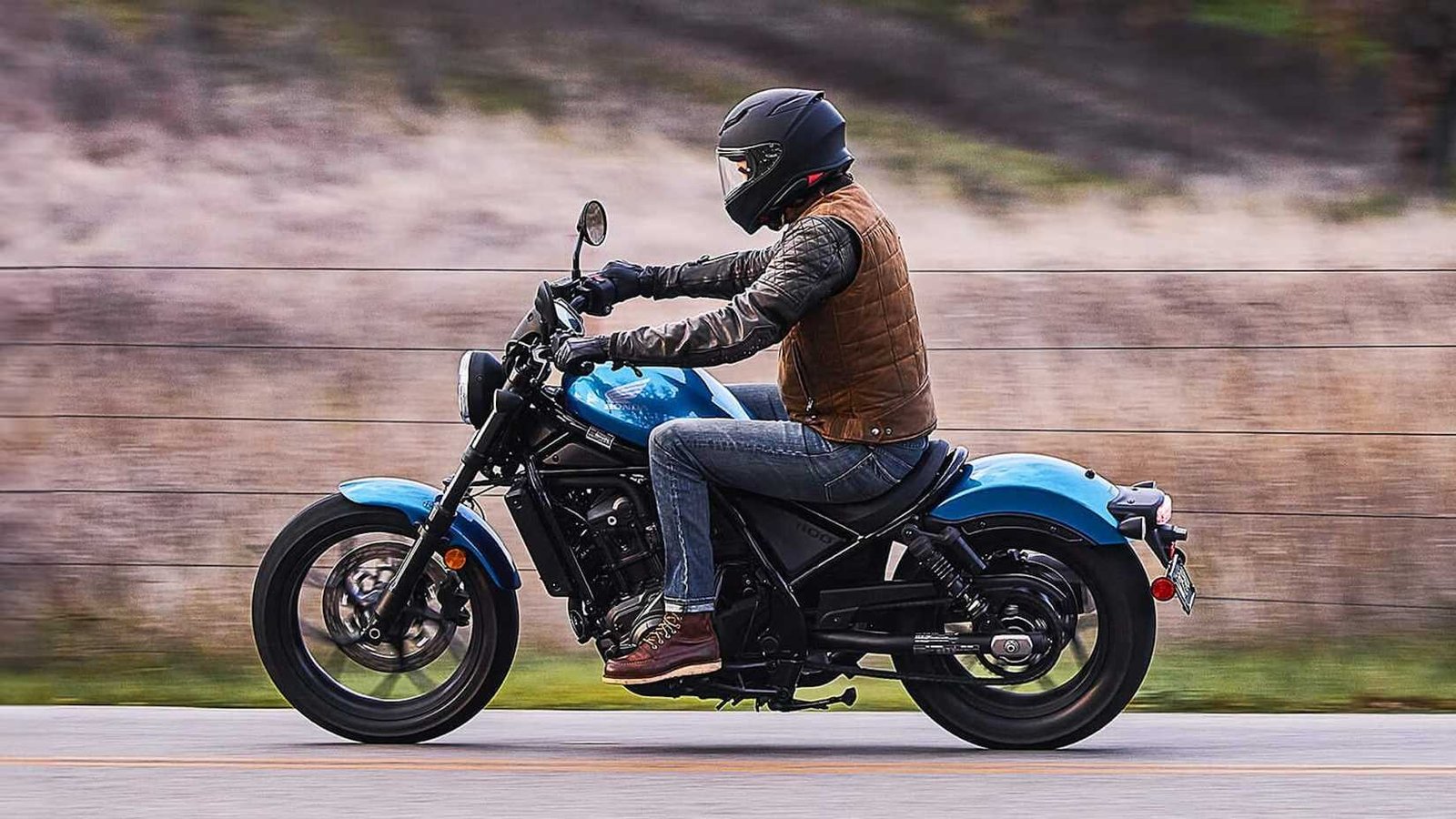
The Rebel doesn’t particularly stand out among motorcycles, to be honest. It is affordable and reliable, and even a beginner can get on one and manage to tame it quickly. What does set it apart, however, is the distinction of being the only cruiser on sale with an automatic gearbox — and a dual-clutch one at that. The driveline is shared with the Africa Twin DCT but optimized for the cruiser segment, making the Rebel an ideal companion for those learning to ride or for commuters who spend a lot of time in stop-and-go traffic. Despite being on sale for several years now, no rival has stepped up to answer the Rebel 1100 DCT.

Nearly two decades ago, Suzuki decided to take on all comers in the cruiser segment with the Boulevard M109R (née Intruder M1800R). It is the biggest cruiser Suzuki has ever made, with brooding looks and acres of chrome in its earliest iterations. The engine, despite appearing air-cooled, is an entirely liquid-cooled unit, and rumor has it that it generated so much torque that the output had to be electronically limited to spare the six-speed gearbox.
Suzuki had to try and tame it with the world’s widest production rear tire on a motorcycle at launch. Today, the M109R is approaching its twentieth year in production and carries no electronics beyond fuel injection. Yet it holds its own among the current crop as a compelling value proposition (besides being one of the fastest Japanese cruisers ever). So imagine how good it was when it first arrived.

Bigger is better, right? In the late 1990s, everyone seemed to believe it, so manufacturers got busy developing cruisers with massive engines. Honda had one with 1,800 cc, Suzuki was working on one with 1,800 cc, and Yamaha had one with 1,700 cc. Then Kawasaki decided to simply build a motorcycle with the largest displacement twin-cylinder engine in the world. The Vulcan VN 2000 is the result.
It looks like the Fat Boy’s larger, corn-fed cousin, but it was as refined as it was heavy. Sadly, it held the title of the largest-displacement production motorcycle for only a brief period before being usurped by the Rocket 3. It remains the largest twin and V-twin production motorcycle to this day, with the largest pistons ever fitted to a production motorcycle.

The Gold Wing needs no introduction. But Honda also made a pure cruiser version called the Valkyrie. The Rune was a special edition of the Valkyrie, so its full name is the Honda NRX 1800 Valkyrie Rune. It was built as a showcase of Honda’s capabilities as a manufacturer and sold at a substantial premium at launch.
It probably cost Honda a lot more than its sticker price to produce, since almost all parts were custom-made for it. As a design exercise, it was stunning, with the added bonus of Honda’s quality and reliability. There was nothing on the road like it. Honda pulled it from showrooms after just one year, and we have not seen a proper replacement since.

The late 1990s and early 2000s must have been a wild time for fans of Honda cruisers. You could have one with a V-twin (Shadow), a V4 (Magna), a flat-six (Gold Wing/Valkyrie), and then there was this — the X4, with its transverse inline four-cylinder engine. The engine was later massaged to power the CB1300, so its reliability and performance were beyond question.
The X4 was intended to compete with the Yamaha V-Max, but sadly it never made it to the US. It was sold only in Japan in limited numbers, just like the CB1300 Super Four. Honda continues to sell the CB1300 to this day, and exclusively in Japan. The X4 was discontinued after a mere six years of production.

The V-Max was born of a desire to have a model that could partake in the great American sport of drag racing. When the original launched in 1985, it posted truly impressive numbers: 145 horsepower and 83 lb-ft of torque from 1,198 cc and four cylinders. A patented V-Boost system opened butterfly valves in the intake to feed more air to the engine at high revs, lifting peak power further. The second generation, launched in 2009, raised the bar even higher — a larger engine, more aggressive styling, and a peak output of 200 horsepower. No other cruiser has matched that figure since.

The Shadow series of cruisers sits above the Rebel series in Honda’s lineup and has always been powered by a V-twin. In its current form, it features a liquid-cooled engine styled to look air-cooled, striking the right visual notes for an American-style cruiser — but built with Honda’s characteristic attention to detail and engineering precision. Shadows have been offered with displacements ranging from 125 cc all the way to 1,099 cc, all in V-twin configuration. Drive goes to the rear wheel by either chain or shaft, and the model continues to be sold today in a 750 cc version.

The V-Max may be the most famous V4-powered Japanese cruiser, but the Honda Magna predates it by a few years. Honda used a 90-degree liquid-cooled V4 with shaft drive for the Magna, and displacements ranged from 500 cc all the way to 1,098 cc for the V65 Super Magna. That flagship model was among the fastest production motorcycles of its era, with independent testers clocking it at 140 mph. The Magna’s defining styling element was its quad upswept exhaust pipes — two to a side — first seen on the 1987 model year.

The Virago was a range of V-twin cruisers manufactured by Yamaha for well over a quarter of a century. Its significance lies partly in what it spawned: Yamaha’s Star range of motorcycles, including the V-Star and Road Star lines, some of which were genuine Harley-Davidson killers. The Virago was Yamaha’s first cruiser to use a monoshock rear suspension — a setup that American cruisers still largely eschew in favor of old-school twin rear shocks. True to Yamaha’s heritage, it handled exceptionally well for a cruiser and made for a rewarding ride for the enthusiast.

Suzuki had the GS series in the 1980s — the manufacturer’s first four-stroke lineup of motorcycles. If the GS range sounds familiar, that’s because it evolved into the GSX series of motorcycles. Suzuki equipped the GS series with liquid-cooled engines, which delivered consistent performance across varying conditions.
The 1100 was the flagship, and the GS1100L and GS1100GL were the cruiser variants of the street bike. While Honda and Yamaha were fitting their power cruisers with V4s, Suzuki offered customers an inline-four derived from a sweet-handling street machine — quite a potent combination.
Sources: OEMs